
 Available in US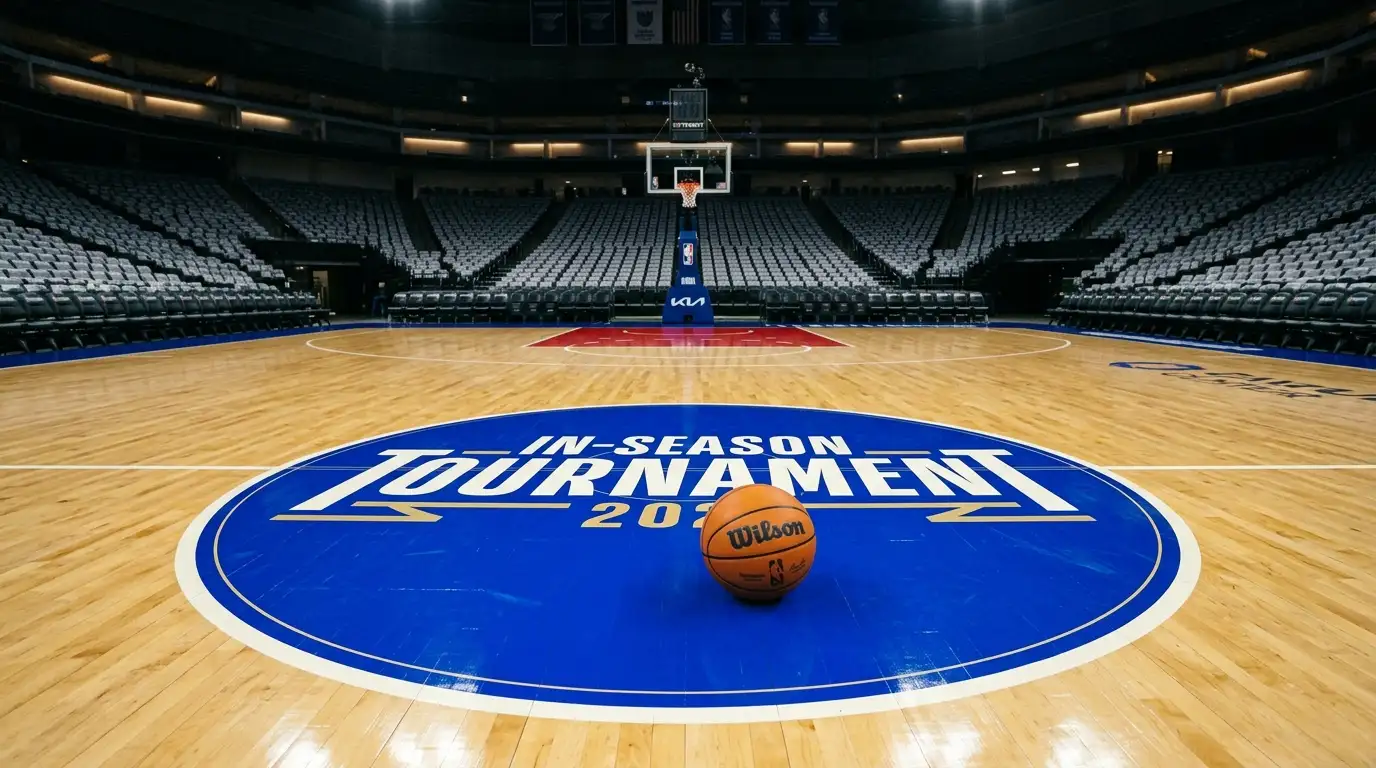
- Tournament Assignment Trends – Painted Courts and Crew Profiling
- The structural setup of the NBA Cup
- The whistle frequency shift the data supports
- The Foster pattern in Cup games specifically
- The Vegas final and what changes for the championship
- How UK markets price the Cup adjustment
- The knockout round dynamics and why they matter
- What I do differently for Cup games
- The Cup verdict from my notes
Tournament Assignment Trends – Painted Courts and Crew Profiling
The first NBA Cup group-stage game I watched in November 2023 was Lakers-Suns on the brightly painted tournament court at Crypto.com Arena. The garish floor was the visual gimmick. What caught my attention by the second quarter was something subtler – the officials were calling the game slightly differently. More attentive to off-ball contact. Quicker on the whistle for marginal calls. The cumulative effect on the total was about four points above the spread the line implied for a Lakers-Suns matchup of comparable intensity in a non-tournament setting. That was the moment I started building a separate data file for NBA Cup officiating, because the patterns looked different enough to be worth tracking.
Three Cup seasons later, I have enough data to say with confidence that the tournament does produce a measurable officiating shift, that the shift is not what most public commentary describes, and that the betting implications are smaller than the casual visual evidence suggests but real enough to matter on the right markets. Let me walk through what the data actually shows and how to apply it to UK NBA Cup betting.
The structural setup of the NBA Cup
The NBA Cup, officially the Emirates NBA Cup, was introduced in the 2023-24 season as the league’s in-season tournament. Six round-robin group-stage games per team in November, single-elimination quarterfinals and semifinals in early December, and the championship game in Las Vegas as the final. The group-stage games count toward the regular-season standings, which means the players have skin in the game beyond just the Cup itself. The knockout games do not count toward regular-season records – the Cup final, in particular, is a standalone event.
For officiating purposes, the league has not announced a separate assignment process for Cup games. The crews are drawn from the regular officiating pool, the chiefs are assigned on the same rotational basis, and the referee development infrastructure runs the same way. What changes – and this is the part that matters analytically – is the priority weighting the league applies to Cup assignments. Senior officials are more likely to draw Cup games than non-Cup November games. The competitive stakes for officials themselves are higher because the games are higher-profile and the performance reviews carry more weight.
The aggregate effect is that the average officiating quality on Cup games is slightly higher than on a comparable non-Cup November game, in the sense that the average official assigned to a Cup game has a longer track record and a higher league grade. The variance in officiating quality is lower on Cup games – fewer junior officials, fewer crews in unfamiliar combinations. Both of these factors affect how the crew’s calling patterns translate into game outcomes.
The whistle frequency shift the data supports
Across the three completed Cup seasons through 2025-26, the average foul count per Cup game runs roughly 1.5 to 2 calls higher than the average for non-Cup games in the same November-December window. The differential is statistically modest but consistent. The breakdown is informative – the additional calls are concentrated in the second and third quarters, not the closing minutes. The closing-minute calling pattern in Cup games is actually slightly tighter than in regular-season games, with fewer marginal calls and a stronger preference for letting the players decide.
The mechanism, as I read it, is that the more senior officials assigned to Cup games are more confident in their early-game calls, more willing to set the tone with marginal calls in the first half, and more disciplined about restraining themselves in the closing minutes. The asymmetry produces a foul-count signature that is higher in aggregate but more concentrated in the non-decisive minutes, which has specific implications for how the calls translate into total-points outcomes.
The total-points effect of the call distribution is roughly neutral. The additional second and third quarter fouls produce additional free-throw points, but the tighter closing-minute calling reduces the late-game pace and the closing-minute scoring rate. The two effects approximately cancel on the total. What does not cancel is the spread-relevant variance – the tighter closing-minute pattern produces lower variance in late-game outcomes, which means the spread closes are slightly more reliable on Cup games than on the comparable non-Cup sample.
The Foster pattern in Cup games specifically
Scott Foster has been assigned to Cup games at roughly the rate his seniority would suggest. The interesting wrinkle is that his Cup-game record diverges from his regular-season pattern in ways worth flagging. The Foster 2023-24 home wins ran at 68.3 per cent as crew chief and 39.6 per cent across his full assignment slate. His Cup-game sample is small – perhaps 8 to 12 games per season – but the home-win rate in his Cup assignments has run noticeably higher than his regular-season home-win rate. The sample is too small to draw strong conclusions, but the direction of the divergence is worth tracking.
The mechanism I would posit, working from the broader Cup officiating shift, is that the structural changes that produce the modest whistle-frequency increase in Cup games compound for the high-profile crew chiefs. Foster’s calling tendencies as chief, which are most pronounced in the first-half tone-setting phase of his games, have more impact in Cup contests because the assigned crews follow his lead more consistently. The result is that Foster-chief Cup games show stronger directional patterns than Foster-chief regular-season games, even though the underlying officiating philosophy has not changed.
This is the kind of small-sample observation that I treat as hypothesis-generating rather than as a settled finding. The right approach is to flag the pattern, watch the data accumulate across additional Cup seasons, and adjust the betting framework as the sample grows. If the pattern holds across the next two or three Cup cycles, it becomes a usable betting input. If it dissolves into random variation, it gets dropped.
The Vegas final and what changes for the championship
The Cup championship game in Las Vegas operates under different conditions from the group-stage and knockout games. The venue is neutral. The crowd is mixed. The stakes are explicitly Cup-only, with no regular-season standings implication. The officiating assignment for the final draws from the most senior tier of the staff, and the crew composition tends to be unusually experienced relative to a comparable mid-season high-profile game.
The officiating data from the three completed Cup finals – Lakers-Pacers 2023, Bucks-Thunder 2024, and Bucks-Thunder again in 2025 – is too thin to draw clean conclusions from. The qualitative pattern is that the calling tone in the final mirrors the closing-minute pattern of the group-stage Cup games – tighter than the regular season, more willing to let physical play continue, less reactive to crowd pressure. The total points in all three finals have come in below the closing line, which is consistent with the lower-pace, tighter-calling officiating tone but is also consistent with simple variance on three observations.
The betting implication for the Cup final specifically is that the closing-line total may systematically overestimate the scoring environment because the closing line is built from the regular-season pricing baseline rather than from the Cup-specific calling environment. The sample is too small to bet aggressively on this, but the under has been the consistent direction across the limited data we have.
How UK markets price the Cup adjustment
UK bookmakers offer NBA Cup markets on essentially the same structure as regular-season markets – moneyline, spread, total, basic player props. The pricing reflects the underlying matchup with limited adjustment for the Cup-specific officiating environment. Operators that mirror US pricing carry the same adjustments US operators apply, which is typically a small but inconsistent treatment of the Cup variable. Operators that price independently sometimes ignore the Cup variable entirely and price the games as regular November-December assignments.
The actionable implication for a UK bettor is that the operators most aggressive about NBA Cup-specific pricing – typically the ones with the strongest US sister-book relationships – produce sharper lines on the Cup markets. The operators that ignore the Cup variable produce sloppier pricing that occasionally creates value on the under side of totals or on the road team in close knockout games. Identifying which of your usual operators sits in which category for the Cup window is part of the late-November preparation that pays off through the tournament.
The knockout round dynamics and why they matter
The quarterfinals, semifinals, and final operate under single-elimination rules. The motivation structure for the players is different – Cup glory versus regular-season standing – but the officiating crew, the broadcast environment, and the broader league context shift only modestly. The data from the 2023-24 and 2024-25 knockout rounds suggests that the additional motivation does produce a small uptick in pace and a small uptick in scoring efficiency, but the magnitudes are smaller than the recreational coverage emphasises.
The interesting officiating signal in the knockout games is the late-game calling pattern. The Belasen 2025 finding that referees made 23 per cent fewer wrong calls against road underdogs than road favourites in narrow-spread games applies with particular force in the knockout context, because the Cup knockout games are more likely to be narrow-spread than the average regular-season game. The implication is that the bias signal Belasen identified runs slightly stronger in the Cup knockout sample, which makes the road-favourite spread the specific market type to be cautious about during the Cup knockouts.
The deeper analysis of how playoff-style officiating patterns affect betting markets, including the Finals-specific officiating dynamics that have direct lineage from the Cup knockout context, runs through the NBA Finals referee betting piece, which works through the highest-stakes officiating environment in the league and shows how the patterns visible in Cup knockouts amplify in the actual Finals series.
What I do differently for Cup games
My working framework for NBA Cup betting reduces to three adjustments from the regular-season approach. First, I assign slightly more weight to the crew chief identity, because the crew chief has more impact on Cup-game outcomes than on regular-season outcomes of comparable matchup. Second, I tighten the total-points adjustment in the closing-line evaluation, because the offsetting effects of higher early-game fouls and tighter late-game calls produce more reliable total settlements than the regular-season pattern. Third, I treat the knockout-round road-favourite spread market with extra caution, because the Belasen-style bias signal applies with particular force in narrow-spread elimination games.
None of these adjustments is large. The Cup environment shifts the underlying officiating signal modestly rather than dramatically. The mistake bettors make is to overweight the Cup variable because the painted court and the tournament packaging make it feel like a structurally different basketball game. It is the same basketball game with marginally different officiating, and the right pricing adjustments are correspondingly marginal. The bettors who profit from Cup-specific edges are the ones who calibrate the adjustment correctly rather than overestimating it.
The Cup verdict from my notes
The NBA Cup does produce a real officiating signal that matters for betting, but the signal is smaller than the recreational coverage suggests and concentrated in specific market types. The closing-minute calling tightening, the senior-official assignment pattern, and the chief-driven variance amplification are the three components worth tracking. The painted court is purely cosmetic. The change in officiating tone is real but modest. The right betting framework treats the Cup as a regular-season window with specific qualitative adjustments rather than as a structurally different competition.
Articles
Published by the nbarefbettin team.
